Project Breakdowns
This section offers an in-depth look at three complex and meaningful costume builds. Each project highlights a different facet of my creative process: historical research, collaborative adaptation, and narrative interpretation. From translating Renaissance tailoring techniques to reimagining book-based characters through fashion, these breakdowns showcase not only technical execution but also the layered storytelling embedded in each garment. By walking through the conceptual, historical, and constructional stages, I aim to illustrate how costume can function as both craftsmanship and narrative language.
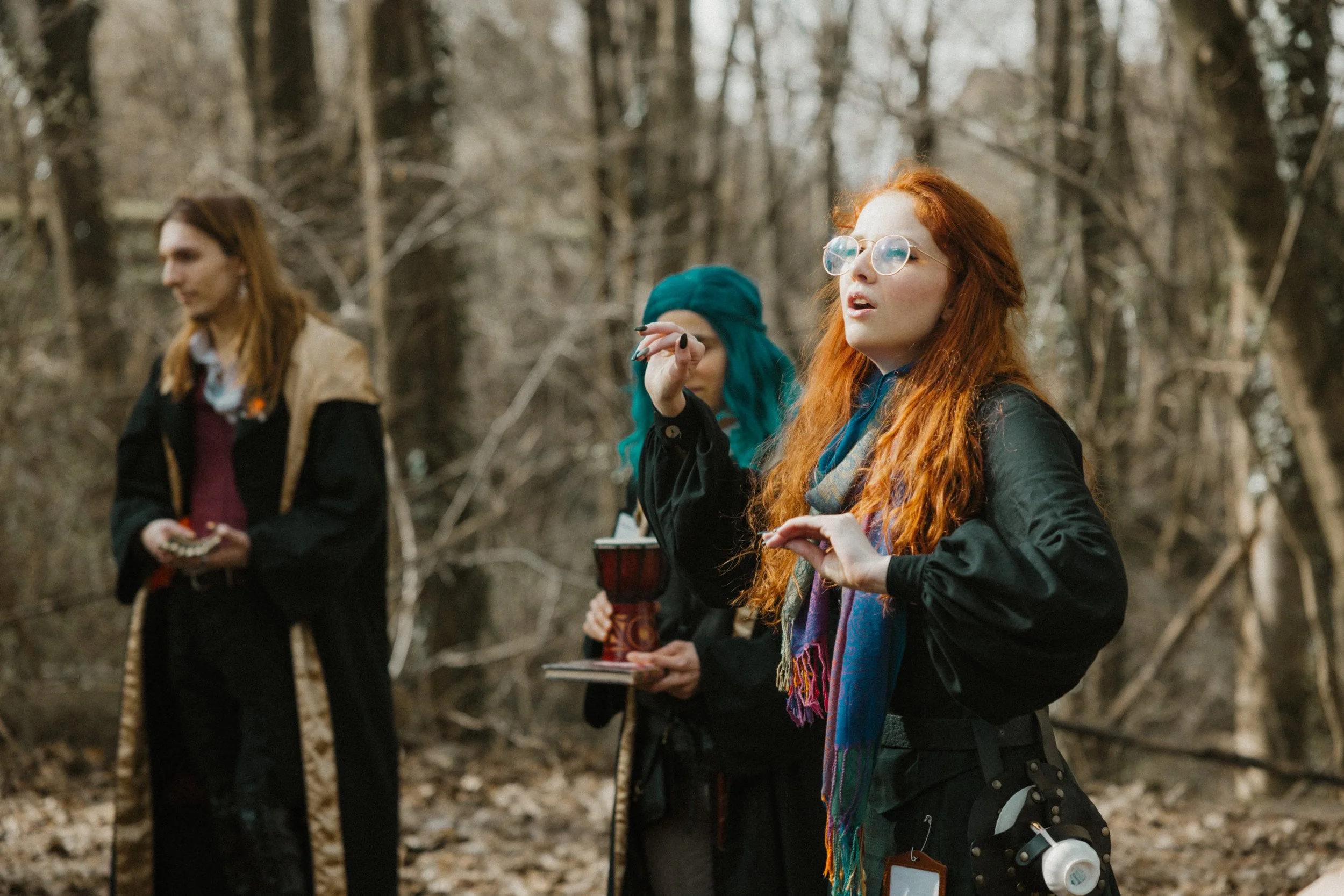
Context: Fashion as Political and Social Language
In late 15th-century Italy, clothing was more than personal style. It was a visual language governed by sumptuary laws, regional customs, and shifting power dynamics. The gamurra, a fitted gown worn over a camicia (linen shift), became the dominant silhouette for upper- and middle-class women across city-states like Florence and Venice. The construction of these garments communicated wealth, marital status, modesty, and regional allegiance.
High and middle classes signaled their status through materials like silk, brocade, and fine wool, as well as through elaborate sleeve styles, decorative lacing, and embroidery. These elements were often regulated by sumptuary laws to prevent the lower classes from imitating elite fashion. In contrast, lower-class women typically wore simpler versions of the same garments: gamurre made of wool or linen, with minimal decoration, limited fabric volume, and practical construction suited for labor. Their clothing prioritized function over display, often without layered ornamentation.
Florentine dress was particularly structured and austere, favoring clean lines, subtle ornamentation, and strong architectural silhouettes. By contrast, Venetian styles leaned toward opulence and fluidity, with layered brocades and rich embellishments, possibly due to Venice’s position as a trade hub with Eastern textile access.
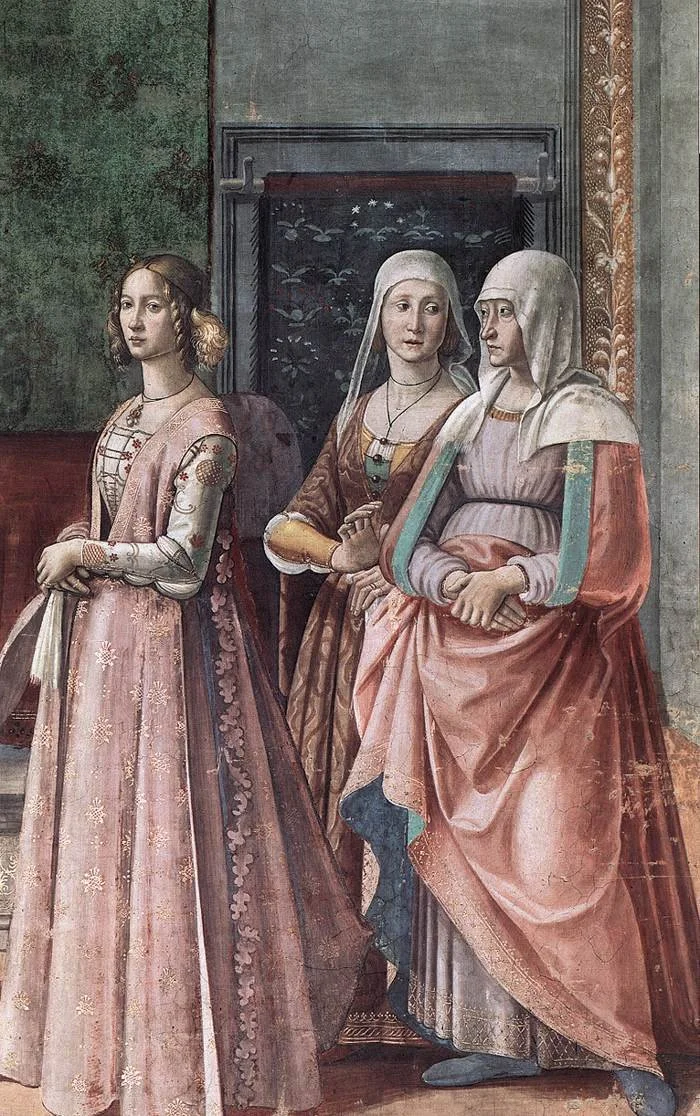
Women’s Dress in Late 15th-Century Florence and Venice
Garment Structure: The Gamurra and its Layers
The gamurra was the foundation of women’s dress from the 1470s onward. It typically consisted of:
Fitted bodice with lacing (either side, front, or back depending on the decade and status)
Gored or pleated skirt, attached directly to the bodice
Removable sleeves, laced at the shoulder with ribbons or points
Worn over a camicia, usually of linen, sometimes with embroidery
Detachable sleeves were particularly symbolic: they reflected both wealth (fabric was expensive) and agency, as women could gift clothing specifically sleeves to lovers or swap them to reflect different social roles.
The slashing detail on the sleeves draws on Germanic and Venetian influence, where slash and puff emerged as a trend. While not always present in Florentine conservative styles, this detail suits Annika’s outsider identity: a girl of Venetian origin in a Florentine world.
Construction Techniques & Methods
Period tailoring relied heavily on flat patterning, hand stitching, and structural pleating. There were no zippers, elastic, or commercial fasteners. Historical methods with natural resources were utilised to create high grade durable clothing meant to last the wearer many years.
Due to time constraints, metal eyelets were used instead of the historically accurate hand-worked versions. In the period, eyelets would have been hand-stitched and spiral-laced using cord.
For modern adaptation and comfort of wear over an extended period of time, corset boning was used to reinforce the lacing panels. This is not in line with historical accuracy. Regardless layers of canvas, wool, and pad-stitched linings were still used as per tradition, but comfort was chosen over strict authenticity for this adaptation.
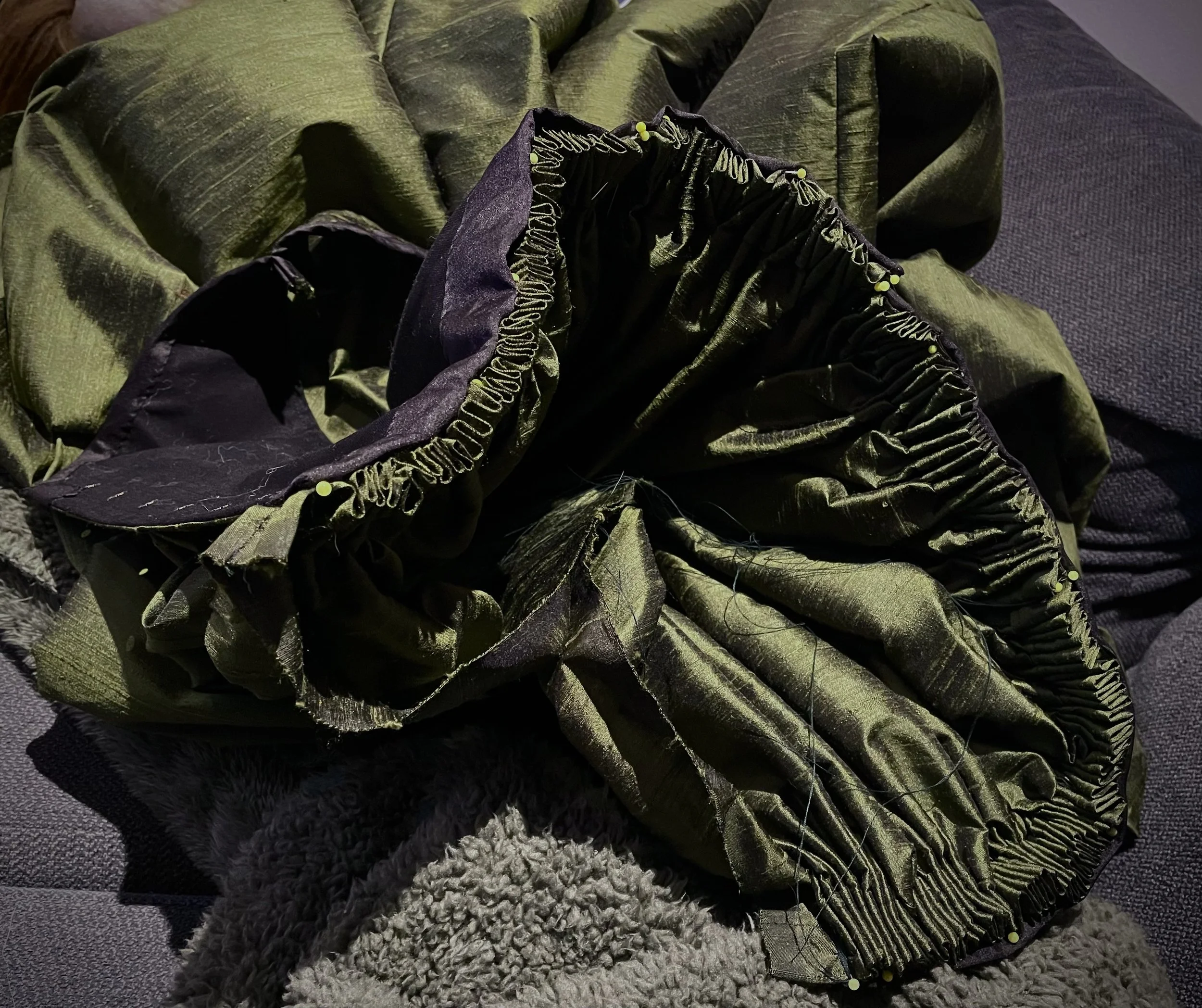
Cartridge pleating was used, by first reinforcing the length of the fabric with a strip of linen and hemming it before measuring out the cartridge pleats at consistent intervals
More traditionally the bodice would have been constructed without boning but with firm support via flatlining reflecting the body-conscious but unstructured support of the time.
Conclusion
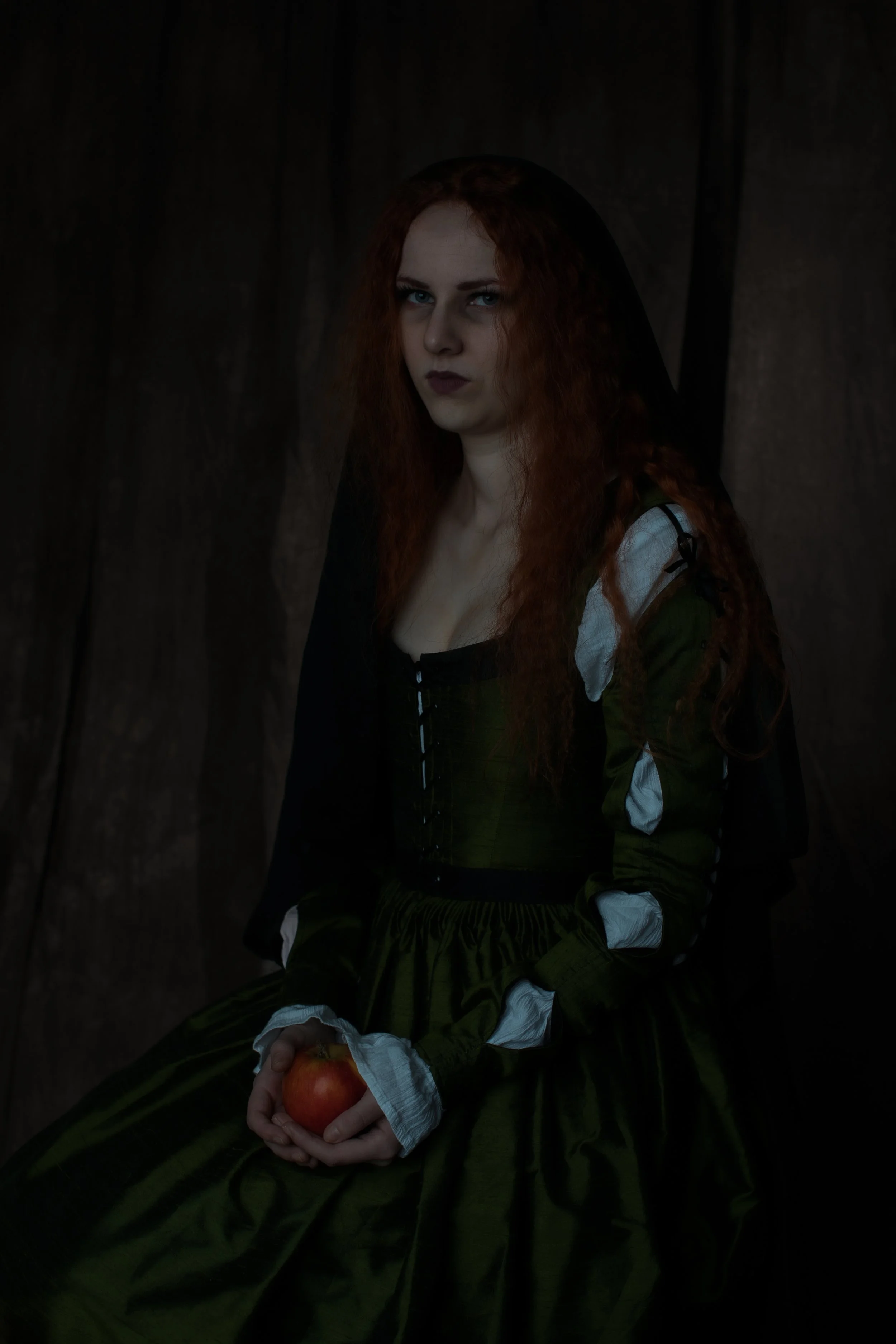
Through this research, visual, social, and material history was synthesised into a coherent costume that narrates Annika’s internal conflict and social displacement. The gown is a wearable story: meticulously constructed, symbolically rich, and historically grounded.
Color Symbolism and Fabric
Green, the chosen main color, held rich meaning in Renaissance Italy:
Associated with youth, hope, and fertility of a young bride in portraits, especially when paired with symbolic objects like fruits or flowers.
In current day and age we ambiguous symbolism: illness, envy, or liminality
A luminous silk dupioni was used for the main body and black silk taffeta for accents. These materials were prized in both Venice and Florence. Florentines were famous for their wool, but wealthier citizens increasingly wore imported silks. Silk reflected not only class but access to luxury trade.
The decision to line the dress in white linen also echoes historical practice: linen was breathable, washable, and served as the base of nearly all clothing. Chemises were rarely seen in full, only peeking out at cuffs, neckline, or sleeve slashes.
Regional & Artistic References
Paintings were a primary reference source:
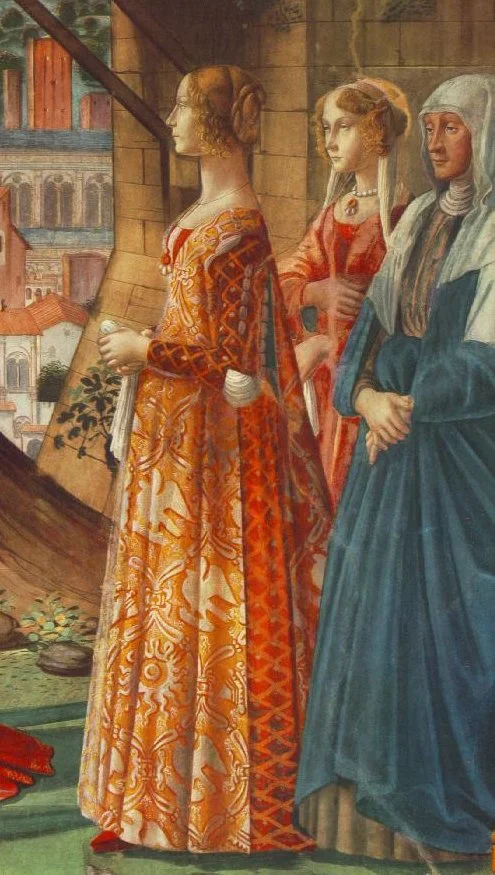
Ghirlandaio’s female portraits, such as Giovanna Tornabuoni (c. 1488), show squared necklines, open sleeves, and minimal ornamentation.
Botticelli’s works, including Portrait of a Woman (1475), feature similar layering and sleeve detail.
Leonardo da Vinci’s portraits such as La Belle Ferronniere (1490) for style details and embellishment placements.
Carlo Crivelli and Vittore Carpaccio offer Venetian contrast more lavish brocades, pearl trims, and looser silhouettes.
The final dress design walks the line between these aesthetics: Florentine restraint with a touch of Venetian flourish and reflects a young woman caught between two cities, two identities, and two expectations of womanhood.
Technical Construction
Foundation Structure
Corset: Custom-drafted pattern combining Victorian and modern techniques
Silk underbust reinforced with coutil and a busk
Spiral and flat steel boning with traditional casings
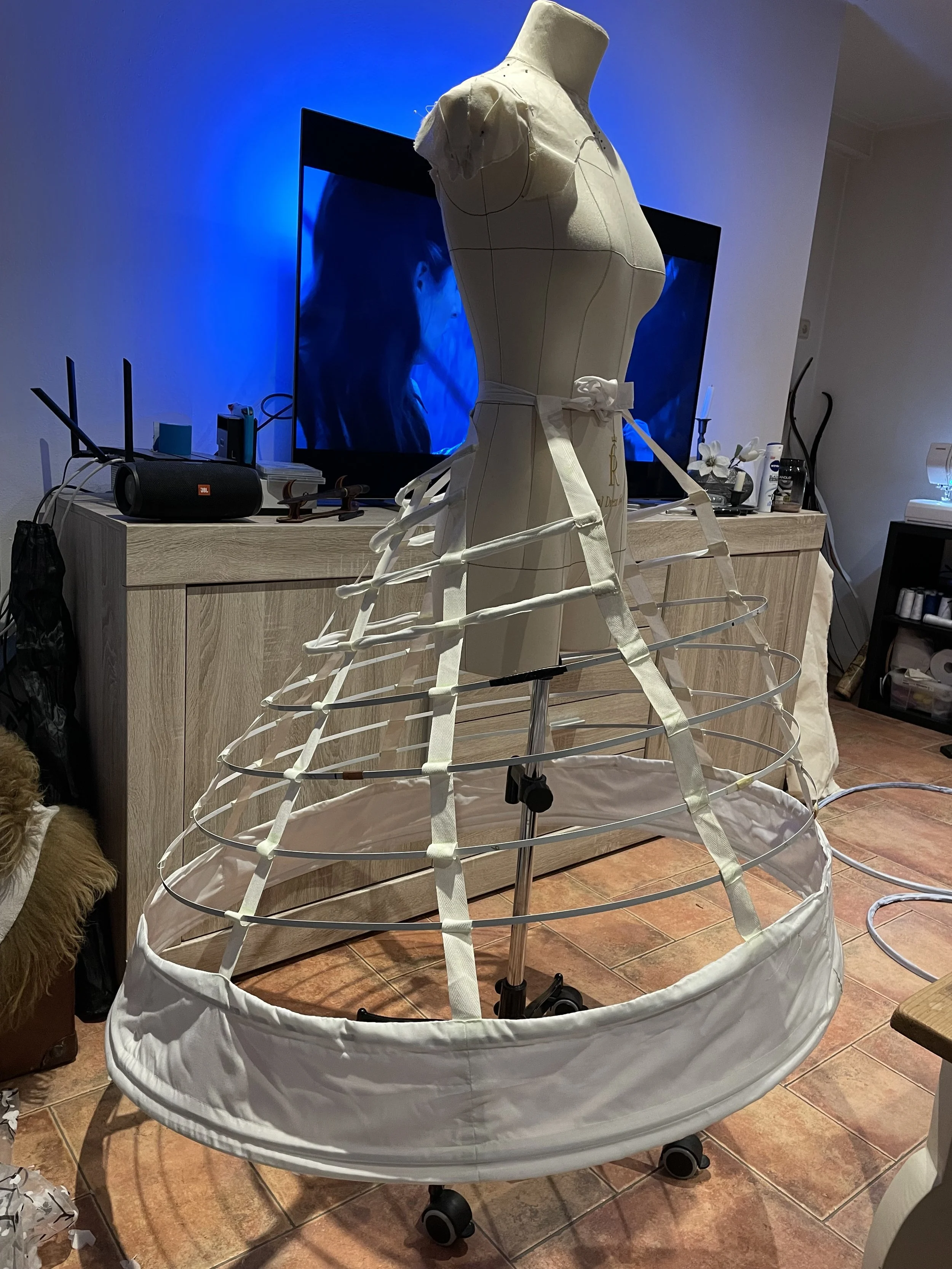
Crinoline: Elliptical Victorian design based on 1860s museum references
Hoop steel construction with cotton casing
Essential for supporting extensive fabric layers
Dress Components
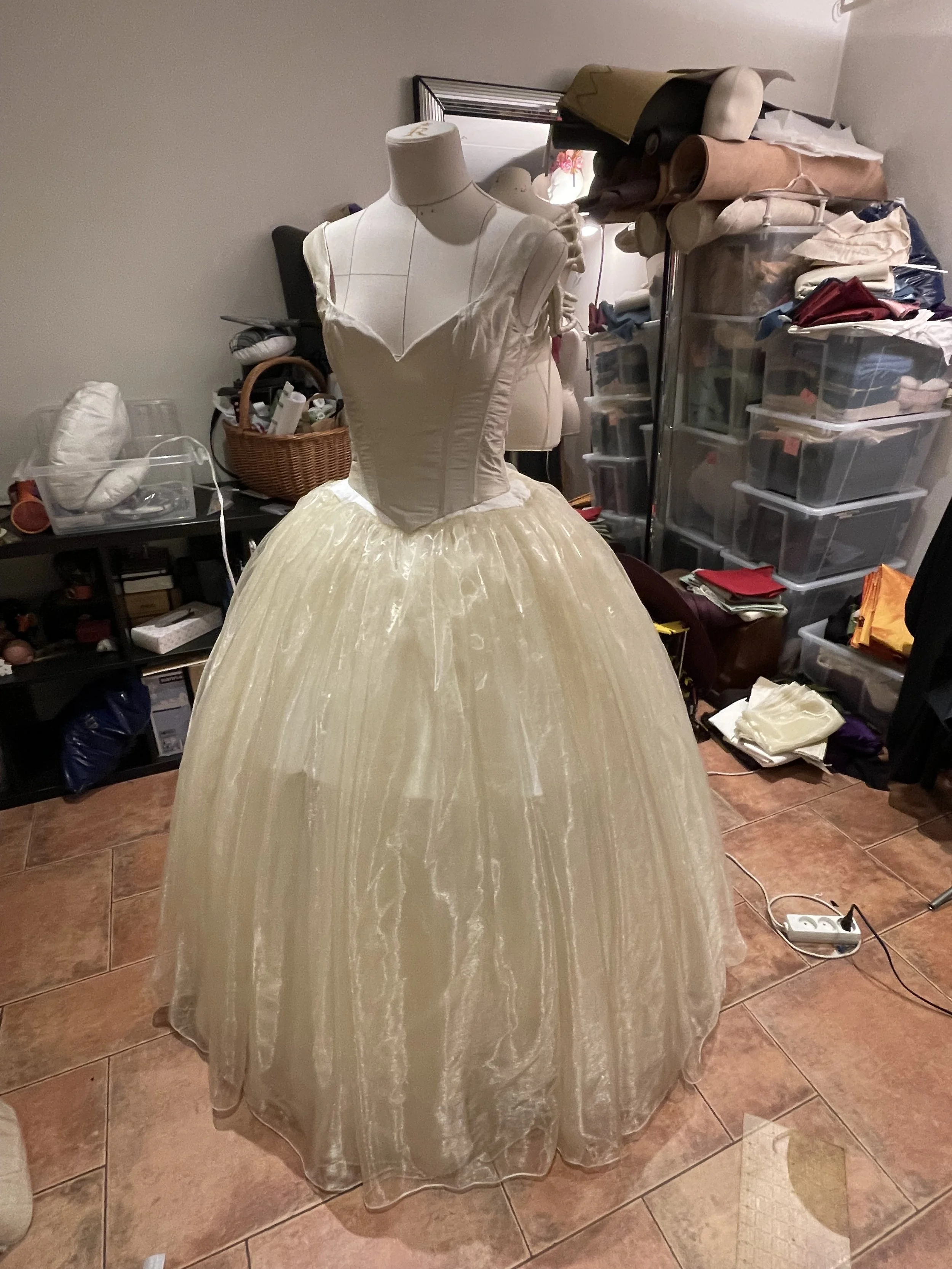
Bodice: Fitted silk construction with sweetheart neckline
Silk taffetta with coutil support layer and fully encased boning
Reinforced seams for structural integrity
Cotton voile lining to protect the bodice
Bolero: Matching silk with organza-lined bridal tulle sleeves
Gold button details at cuffs and neck closure
Symbolic representation of constraint
Skirt System: Layered construction for maximum volume
Petticoat: Multiple circle skirts with tiered organza ruffles
Overskirt: Heavily gathered bridal tulle with shaped waistband
Attachment: Hooks and bars prevent slipping
Source Material & Character Analysis
"I really, truly hated my wedding gown. It was a monstrosity of tulle and chiffon and gossamer, so unlike the loose gowns I usually wore: the bodice fitted, the neckline curved to plump my breasts, and the skirts … The skirts were a sparkling tent, practically floating in the balmy spring air."
The dress represents Feyre's loss of agency—chosen entirely by Ianthe rather than the bride herself. Its overwhelming, impractical nature contrasts sharply with Feyre's warrior identity, embodying the "passive, helpless role" being forced upon her. The excessive femininity masks her true self, much like the long gloves hide her tattoos.

Feyre’s Wedding Dress
Photography & Visual Storytelling
The photoshoot was executed in collaboration with WeAreNerdish, whose meticulous attention to detail and precision perfectly complemented the project's narrative requirements. To achieve the ethereal, otherworldly quality essential to the fae aesthetic, we made the deliberate choice to use a 1950s camera lens rather than modern equipment. This vintage lens created the dreamlike, soft-focus quality that captures the magical realism of Maas's world—prioritizing atmospheric storytelling over technical sharpness.
The photographer's approach blended traditional wedding photography techniques with dramatic staging, directly responding to the book's descriptions of both grandeur and underlying tension. Each shot was carefully composed to capture the dress's overwhelming presence while revealing the character's emotional conflict—the surface beauty masking internal struggle. The vintage lens choice enhanced this duality, creating images that feel both timeless and fantastical, perfectly embodying the intersection of human vulnerability and fae magic central to the story.
Project Overview
This piece translates Feyre's wedding dress from Sarah J. Maas's A Court of Mist and Fury into a wearable garment that captures both the physical description and emotional weight of the literary moment. The dress serves as a symbol of confinement and performative femininity, making it a compelling challenge in narrative costume design.
Design Decisions
Silhouette & Historical Context
I chose a Victorian ballgown silhouette (1860s) to achieve the described "tent" effect while reinforcing themes of restriction and performative femininity. The elliptical crinoline structure creates authentic period volume while symbolically representing the constraints of traditional gender roles.
Symbolic Elements
Ivory/champagne palette: Bridal tradition with subtle rebellion against pure white
Gold closures at neck: Representing the "golden grasp" of confinement
Excessive volume: 30 meters of organza creates the overwhelming presence described
Structured bodice: Contrasts with Feyre's preferred loose, practical clothing
Construction Techniques
French seams throughout for professional finish
Couture boning techniques with proper encasement
Historical pattern drafting methods
Strategic weight distribution through corset structure
Challenges & Solutions
Literary Accuracy: Maas's descriptions contain inconsistencies in materials, styling, and movement that create contradictory visual requirements. The text alternates between describing the dress as both restrictive and flowing, with material descriptions that don't align with the described silhouette and movement. Solution: Prioritized the emotional narrative over literal accuracy, making design choices that best served the dress's symbolic function while creating a cohesive visual interpretation.
Weight Distribution: Solved through properly fitted corset with strategic boning placement to support extensive fabric layers without causing discomfort.
Historical Accuracy vs. Wearability: Balanced through modern materials within traditional construction methods for durability and comfort.
Volume Management: Achieved through layered petticoat system and structured foundation to create the described "tent" effect while maintaining mobility.
Outcome & Impact
This costume successfully bridges literary interpretation and historical accuracy, creating a piece that functions as both accurate character representation and wearable art. The extensive use of couture techniques and historical construction methods demonstrates advanced technical skills while maintaining the narrative's emotional resonance.
The dress serves as a powerful reminder of how clothing can represent freedom or confinement, making it particularly relevant for contemporary discussions about agency, identity, and self-expression.
